
icon-globe
Search Connect with us

Phytogenic growth promoter, a promising alternative to antibiotics in poultry

Prevent E. coli salmonella contamination to chicken supplements to control heat stress in poultry AGP replacers in poultry Natural feed supplements for poultry manufacture in india vinayak ingredients

Antimicrobial additives are commonly included in animal diets for growth promotion and control of diseases. The European Union and the US regulators banned feed antibiotic growth promoters due to not only drug resistance, but also to the risk of possible cross resistance with human pathogenic bacteria.

Decreasing trend of feed antibiotics

Poultry feed devoid of synthetic chemicals or antibiotics is increasingly being popular in the developed nations. Consequently, the feed manufacturers are under regulatory pressure to reduce the use of antibiotic growth promoters as feed additive and find alternatives.

Herbal growth promoters in poultry AGP replacers in poultry Control entropathogens in chicken Weight gain in broilers chicken Vinayak Ingredients India

Thymol, eugenol, and essential oils inhibit enteropathogen like Salmonella and E. coli in the digestive tract. The improved gastrointestinal microclimate favors digestibility and uptake of feed nutrients. Phytomolecules with immunomodulatory effects stimulate growth of immune organs such as spleen, thymus and bursa, upregulating the function of lymphocytes, macrophages and natural killer cells.

The addition of Herbofloxin to drinking water supports digestion and metabolism in the body, stimulates the growth and development of a useful microbiome, limits the multiplication and adhesion of pathogens, and improves the morphology and functioning of enterocytes. Secondly, Herbofloxin reduces harmful intestinal load and ultimately prevents the meat contamination.

Herbofloxin Phytogenic Growth Supplements for Poultry AGP Replacers in Poultry Poultry Feed

Worldwide use of antibiotics

It has been proposed that feed antibiotic usage was an integral part of this revolution in animal industry. It is estimated that 40 % of the antibiotics produced are used for livestock feed additives.

Why are antibiotics given to animals? 

Animals in industrial-scale facilities are routinely fed antibiotics to:

– make animals grow faster and bigger

– control the spread of diseases in animals

– prevent contamination of animal products with zoonotic pathogens

– increase survival of animals, however when antibiotics are overused, it can be hazardous to the human health

Non antibiotic growth promoter in poultry Phytogenic growth supplements for poultry Vinayak Ingredients India Natural poultry feed supplements

The threat of antibiotic resistance

According to the Centers for Disease Control, more than 2 million human illnesses and an estimated 23,000 deaths each year are the result of antibiotic resistance. Therefore, antibiotic growth promoters are discredited by consumer associations as well as by scientists.

Risks associated with drug resistance and superbugs

Antimicrobial resistance is a naturally occurring phenomenon that can be slowed, but not prevented. Over the decades, germs such as bacteria, viruses, parasites and fungi adopt to the medicines that are made to kill them. This makes previously standard drug range for some infections less effective, and sometimes ineffective.

Number of incidences suggests that giving healthy animals regular antibiotics can contribute to the worsening health crisis of the resistance and creation of the deadly superbugs. Superbugs are strains of pathogens that are resistant to common antibiotics and other treatments used to treat the infections they cause.

Post-outbreak medication has had variable effectiveness, but would certainly be less effective due to use of subtherapeutic levels of antibiotics

Phytoactives, sustainable alternatives as non-antibiotic growth promoters for poultry

The feed manufacturers are adopting new forms of natural feed additives that are the products of modern science. This new generation of growth enhancers include botanical additives like appropriate blends of plant extracts. The extracts used as feed additives include many different bio-active ingredients such as alkaloids, bitters, flavonoids, glycosides, saponins, and tannins.

The extracts act on the appetite and intestinal microflora, stimulate the pancreatic secretions to increase endogenous enzyme activity and immune system. Many plant products and their constituents have a broad antimicrobial activity, antioxidant and sedative properties.

Besides this, scientists recently discovered that the appetizing and stimulating activity of plant extracts on animal digestive and immune system could benefit performance and health of farm animals. They postulated that these effects could be due to the increased production of digestive enzymes and the improved utilization of nutrients.

The wise use of antibiotics is not a substitute for, but a complement to good sanitation and husbandry practices. Extensive use of low-level antibiotics in feeds has brought about concern for potential harmful effects due to the development of resistant strains of organisms in host animals that might compromise animal as well as human health.

Prevent E. coli salmonella contamination to chicken supplements to control heat stress in poultry Weight gain in broilers chicken Natural feed supplements for poultry farm

Herbofloxin, a natural growth promoter

HERBOFLOXIN Antibiotic growth promoter replacer Growth promoter in pigs Weight gain in pigs Improve FCR in pigs Swine growth promoter supplements Pig growth supplement

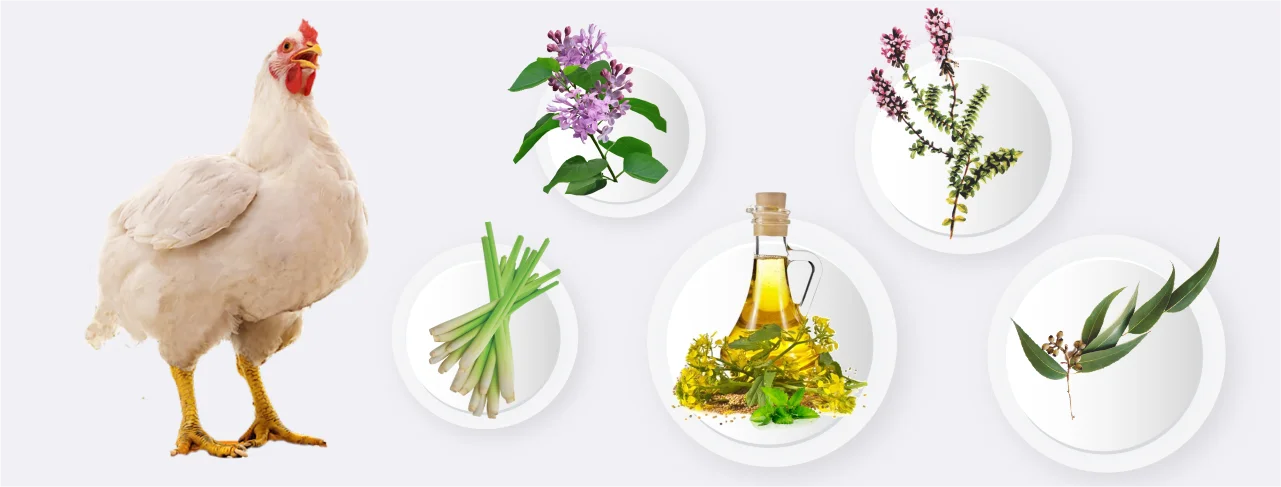
A unique micro-emulsified formulation of phytoactive ingredients such as Thymus vulgaris, Eucalyptus, Syzygium, and Citronella. Herbofloxin improves the gut immune barrier to resist colonization by pathological microflora.

Thymol, eugenol, and essential oils inhibit enteropathogen like Salmonella and E. coli in the digestive tract. Phytoconstituents of antibacterial nature target gut pathogens including important zoonotic bacteria. The improved gastrointestinal microclimate favours digestibility and uptake of nutrients. Phytomolecules with immunomodulatory effects stimulates the growth of immune organs such as the spleen, thymus and bursa, improving the number and function of lymphocytes, macrophages and natural killer cells. Positive effect on hemopoietic system improves efficient muscle oxygenation and feed conversion by promoting the activity of digestive enzymes.

It is important to note that poultry bacteria include a wide variety of human pathogens, such as Escherichia, Salmonella, and many other notable pathogenic genera. This zoonotic organism can be a public health hazard if consumed through contaminated meat. Herbofloxin reduces harmful intestinal load and ultimately prevents meat contamination.

Benefits

  • Antimicrobial activity
  • Stimulation of the immune system
  • Antioxidant and anti-inflammatory activity
  • Stimulation of feed intake and digestive secretions
  • Improves blood and serum parameters such as hepatic and digestive enzymes
  • A tool for antibiotic-free chicken program
Gut health improvements in poultry Control entropathogens in chicken Reducing stress in poultry Herbal feed supplements for poultry

Economic features

  • Higher weight gain
  • Improves nutrient utilization
  • Improves carcass traits

Usage recommendation is 250 – 500 ml per 1000 liter of drinking water in the growing and finishing phase of broilers. Herbofloxin is a natural non-antibiotic growth promoter for environmental friendly and lead to sustainable poultry farming.
Growing Impact of Red Mites (Dermanyssus gallinae) on Birds: A Complete Guide

Effective herbal solutions for controlling red mite infestations in poultry. Learn about the growing impact of Dermanyssus Gallinae on birds and control strategies. Manufactured by Vinayak Ingredients, experts in animal feed additives.

Dermanyssus gallinae, the poultry red mite, chicken mite or roost mite, is a major pest of fowl, pigeons, and other caged birds worldwide. The parasite especially common to poultry breeding and egg production operations, it is directly responsible for hundreds of millions of dollars in egg industry losses every year. The surveys have confirmed the extremely high and increasing prevalence, 60 to 85 percent of flocks are known to have suffered or be suffering from infestations in different regions of the world and this is starting to trickle into backyard flocks.

Economic Impact

According to studies by the layer industry experts the productivity losses are seen up to €0.57 per hen per year and can climb up to €2.50 in high infestations. In Europe alone, the red mite infestation costs approximately €360 million annually.

Transmission of the poultry red mite, as well as the northern fowl mite and the tropical fowl mite, is by mite dispersion or by contact with infested birds, animals, or inanimate objects. In the integrated poultry industry, mites are dispersed most frequently on inanimate objects such as egg flats, crates, or coops or by personnel going from house to house or farm to farm.


Herbal solutions for controlling red mite infestation in poultry. Understand the impact of Dermanyssus Gallinae on birds and learn about effective mite management strategies. Manufactured by Vinayak Ingredients, experts in animal feed additives.


What are Red Mites? How to Identify Them.

Herbal mite control system to prevent poultry mortality due to red mite infestations. Natural poultry feed supplements by Vinayak Ingredients India Pvt. Ltd. for effective red mite management.

Red mites are small, up to 1mm long and 0.7mm wide, slow-moving mites. They range in colour from a very light grey, almost translucent to a light brown, black and blood-red colour after a feed. Their eggs are harder to spot with the naked eye at around 0.4mm and translucent, white in colour. After the eggs are laid, it typically takes up to five days before they take their first feed as protonymphs. When they reach the adult stage, at about 10 days old, this is when they will start to feed most frequently.

They are typically nocturnal feeders and remain hidden during the day in cracks and crevices, nests, cribs and roosts, egg conveyor belts, cardboard boxes and transportation cages. They can occasionally be found in clusters.

Effective herbal red mite management program in poultry farms. Vinayak Ingredients offers herbal poultry supplements for controlling red mites and improving poultry health in India.

Re-infestations

Poultry mite is a very resilient ectoparasite. It can even survive for several months without feeding and can continue to exist even though there is no feeding source. Multi-age mite sites are often tricky to manage, but the mite can crawl from shed to shed and carry disease with them. Reinfection is highly likely either by missing a small colony of red mite or on the body of the pullets that make up the next flock. They can even migrate wild birds into poultry sheds. The reason why many producers are failing to control red mite is because of a lack of understanding of the products they are using.

Dermanyssus gallinae Causes Both Direct and Indirect Damage in Poultry Houses:

The loss of vitality due to parasitism reduces hen production; and the mite can transmit several viral diseases (Newcastle disease paramyxovirus; avian influenza a virus; fowlpox virus) as well as bacterial infections (Escherichia coli, Erysipelothrix rhusiopathiae, Pasteurella multocida, Salmonella gallinarum and S. enteritidis).

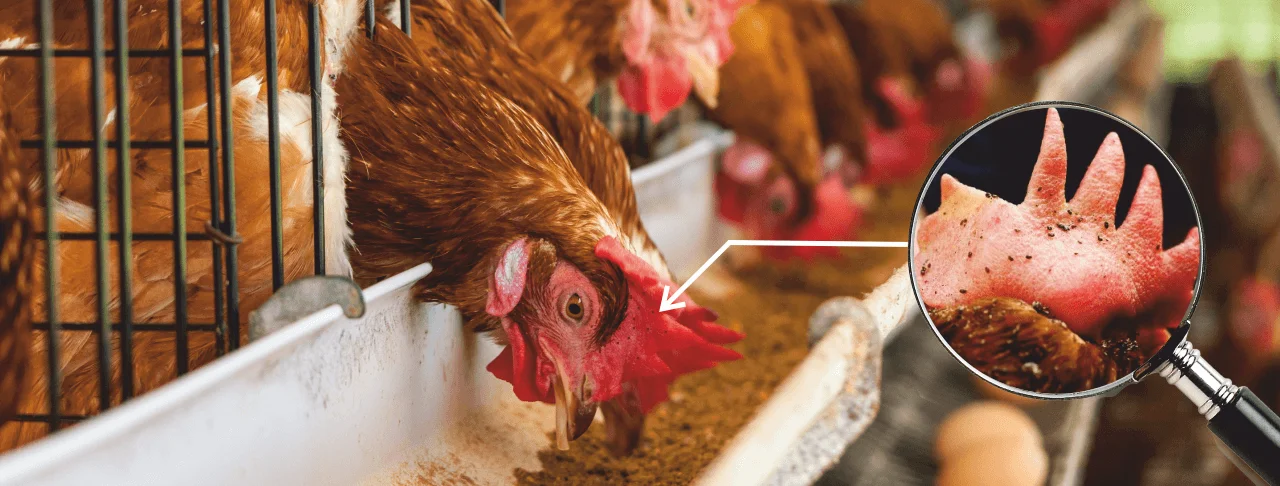
Flocks with mite infestations can suffer from: visible skin irritation and lesions on the breast and legs; increased stress; altered sleep patterns; feather plucking; anaemia, which presents as comb and pallor wattle; and death, in extreme cases. Stress is induced by pain and skin irritation associated with repeated mite bites favoured by the very high parasite load typical of red mite infestations, with mite densities ranging from 25,000 to 500,000 mites per hen. In the worst cases, poultry red mite can consume up to 5% of a hen’s blood in one night.

Limiter, A Novel Efficient Herbal Solution for Poultry Red Mite,

LIMITER, an effective natural solution for controlling poultry red mites, designed to improve poultry health and productivity. Vinayak Ingredients specializes in eco-friendly feed additives for poultry.

Despite chemical control of poultry red mites remaining the dominant method at the commercial farms, the acaricidal treatments can only give limited or short-period relief to the birds. Mainly due to difficulties associated with the effective application and emergence of resistance in mites.

Limiter is a stable combination of plant-derived oils designed on a pragmatic approach of reducing mites through a multipronged strategy. No resistance due to effective triple way mode of action i.e. gustatory avoidance, olfactory repellency, and contact toxicity. The key elements of the natural remedy for mite management are derived from Eucalyptus oil, Camphor, and Basil. It makes Limiter easy to register, use,  and one of the safest products in the market.

Limiter is a concentrated extract of active phytomolecules and therefore it needs to be diluted at the dose of 150 ml per 1000 litre of drinking water.

Limiter is recommended to use for 1 week – 1st application then 2nd application for 1 week after an interval of 7 days. It can be re-used in case of re-infestation as per the recommended protocol.

Salient Features

  • Protects birds from blood-feeding stages of the red mites i.e. Protonymphs, Deutonymphs, and some adult stages.
  • No prescription required for use at the farms
  • Readily soluble in water
  • Birds do not need to be removed.
  • No harmful effects and can be used recurrently for a long duration without developing resistance.
  • No residues in the eggs and meat.
  • No withdrawal period
Herbal mite control system for poultry. Vinayak Ingredients offers natural red mite management supplements to prevent infestations and improve bird health in poultry farming.

Advantages

  • Reduces stress, irritation, mortality, and body lesions.
  • Reduces spread of poultry pathogens
  • Improves egg production and FCR
  • Controls mite population and saves economic losses
  • Improves bird health and welfare