
icon-globe
Search Connect with us

How State-Level Bans Are Accelerating Synthetic Dye Removal
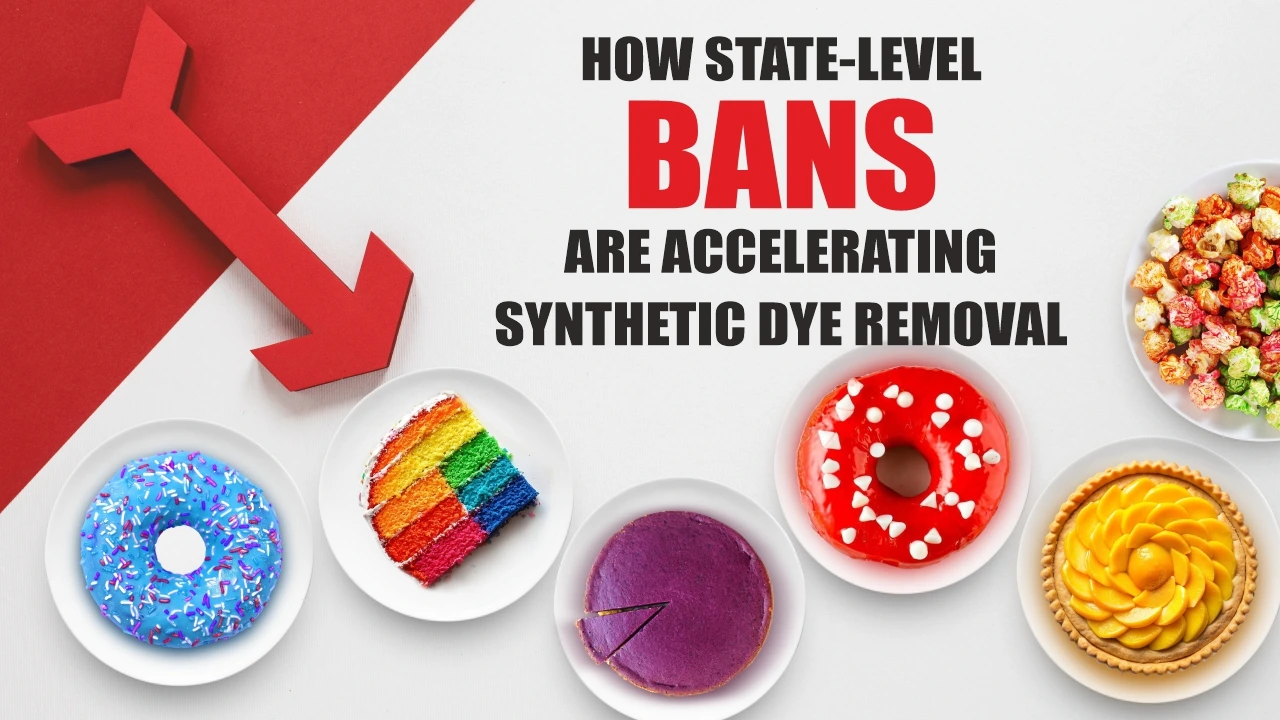
How State-Level Bans Are Accelerating Synthetic Dye Removal

Natural food color additives replacing synthetic dyes in food industry

Synthetic food coloring has been a hallmark of processed food for decades in America and around the world, but increasing health concerns regarding their possible effects are reshaping the food industry landscape. Drawing together scientific data has determined some petroleum-derived colors to be linked to hyperactivity, allergies, and unfavorable long-term effects on children.

States are taking a leadership role in reconsidering color additive safety. California, West Virginia, and Virginia have already passed bans or restrictions, a national trend. As legislative momentum gains strength, natural food colors will be the standard.

West Virginia’s Sweeping Ban on Synthetic Food Dyes

West Virginia ranks low on many health measures and it hit the headlines when West Virginia became the first state in the U.S. to pass a sweeping legislation banning food dyes, including Red 3, Red 40, Yellow 5, Yellow 6, Blue 1, Blue 2, and Green 3, in the early part of 2025. The bill begins with school lunches and progresses to a full ban across the state by 2028.

This is due to rising public outcry against the use of artificial color among children and pressure from lobby groups calling for safer options. To manufacturers, it means that any product put in the market in West Virginia must be reformulated to fit new natural colors, calling for reformulation timelines.

California’s Ban on Artificial Dyes in School Foods

California has historically been a trendsetter on food regulation, and the state’s recent prohibition on six artificial food dyes that are added to foods that go into public school cafeterias is no exception. By targeting high-profile foods served in public schools, the bill attempts to directly affect the health of children but inadvertently compels manufacturers to reformulate for the larger market.

Considering the size and market power of California, this action is going to have a ripple effect throughout the whole US food supply chain. The nationally branded companies should brace themselves for the presumption that what occurs in California is going to become the standard elsewhere.

Virginia and West Virginia Legislation Targeting Removal of Synthetic Colors in Schools

Besides West Virginia’s general prohibition, Virginia and Utah also passed new legislation limiting  utilization of artificial food colorings in the school lunch program. Virginia was a follow-up to West Virginia’s challenge to coloring in school lunches, while Utah’s HB 402 prohibits the use of certain synthetic dyes and additives in foods served in public schools, classifying them as not permitted in the school meal context..

Together, these state efforts reveal a growing regional domino effect, especially in school systems whose primary objective is the nutrition of children. They suggest the way state law and local activism are propelling food reform faster than the federal agencies alone.

FDA’s National Plan to Phase Out Petroleum-Based Synthetic Food Dyes

The U.S. Food and Drug Administration (FDA) and the U.S. Department of Health and Human Services (HHS) recently released a phased plan to move away from petroleum-based synthetic dyes in the federal food supply. This federal initiative parallels state momentum, providing a uniform course of action for food manufacturers.

FDA is also approving and making available natural color additives like butterfly pea flower extract, spirulina, and paprika oleoresin at the same time. That this is happening both through eliminating artificial dyes and through increasing natural approvals makes reformulation in industry more easily done. Market Impact: Increasing Demand for Natural Colors

With regulatory wave and consumer pull in its favor, U.S. demand for natural colors is increasing at historic pace. Consumers grow more cautious about packaging that carries “synthetic” or “artificial” dyes and move towards brands that are committed to botany-derived, classical ingredients.

Natural colors follow health and safety trends and also bring marketing benefits to a company. They are a better for you kind of ingredient compared to synthetic and petroleum derived food dyes.

How Vinayak Facilitates the Transition

When prohibitions come into effect and reformulation deadlines loom, manufacturers need partners who can offer reliable, scalable, and regulation-friendly solutions. Vinayak Corporation joins U.S. brands at this time of transformation with:

Ecocol Natural Colors: Vinayak’s ECOCOL range has a robust range of stable, plant-based colorants like spirulina, turmeric, paprika oleoresin, butterfly pea flower, anthocyanin, beetroot, vegetable charcoal, natural TiO2 substitute, annatto and specially formulated

Technical Capability: Recommendations for pH compatibility, thermal stability, and application-specific concerns in beverage, confectionery, bakery, dairy, and nutraceutical use.

Custom Formulations: Natural color solutions to replace synthetics without reducing product attractiveness.

Scalable Sourcing: Reliable global supply chain and sustainable agronomy programs to provide repeat quality and access.

With Vinayak, food and beverage companies can reformulate with certainty, well ahead of changing regulation and meeting consumer demand for safer, natural products.

Conclusion: A Nationwide Shift is Underway

West Virginia, California, and Virginia state bans are not unique instances, they are at the forefront of a national movement away from artificial food dyes. With the FDA’s industry-wide phase-down program fueling this trend, the U.S. food industry is on the verge of entering an era in which natural colors will reign supreme.

Firms that move early in adopting natural solutions will be rewarded with consumer confidence, stay ahead of regulatory barriers, and be at a competitive advantage. Vinayak Corporation is poised to lead this shift with experience, innovation, and regular natural color solutions.
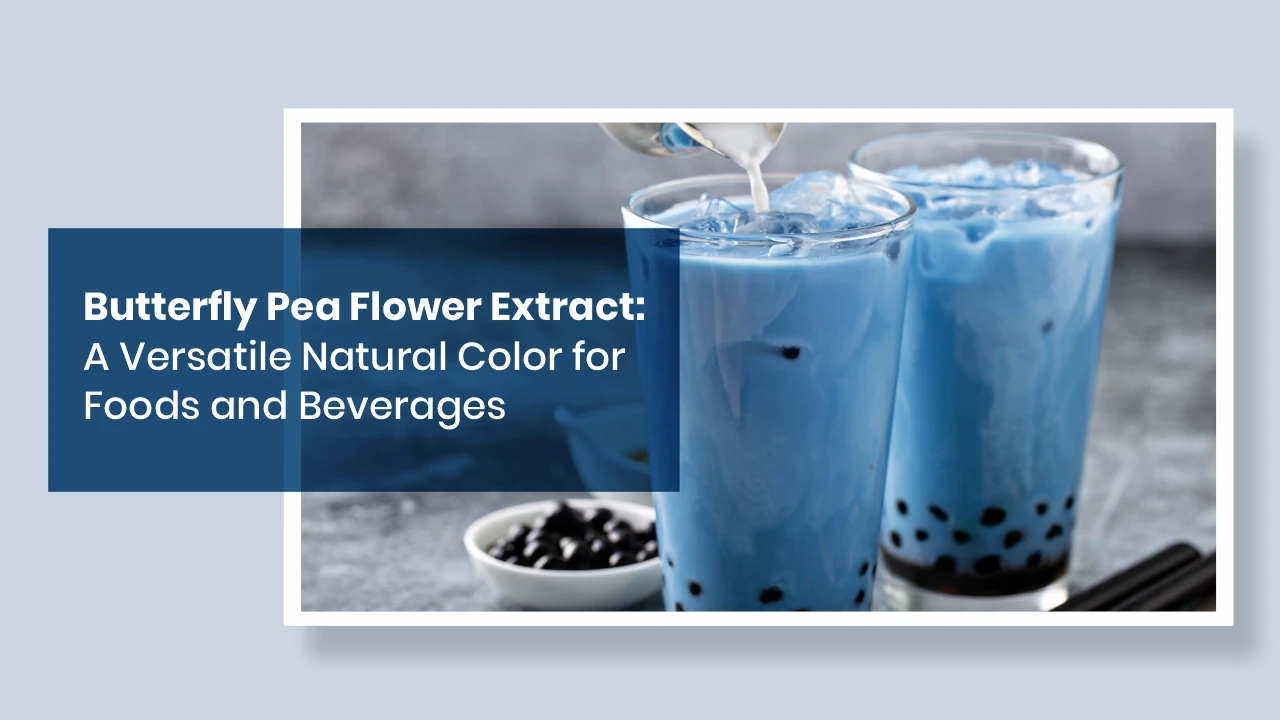
Butterfly Pea Flower Extract: A Versatile Natural Color for Foods and Beverages

Butterfly Pea Flower Extract: A Versatile Natural Color for Foods and Beverages

Unlock Natural Blue Color for Products with Butterfly Pea Extract

Introduction: The Rise of Natural Blue in the U.S.

Natural color from the petals of Clitoria ternatea or Butterfly pea flower is becoming widely popular as a plant-based solution for one of F&B formulation’s most challenging tasks: getting a stable natural blue color. Although red and yellow pigments from natural sources are prevalent, vibrant blues have been far more elusive. With its vibrant color, pH sensitivity, and just-in-time regulatory approval in the United States, butterfly pea natural color will become a favorite among companies looking to meet the demand for natural, plant-based, label-friendly color.

Chemistry of Pigments: The function of Delphinidin

The deep color of butterfly pea flowers is primarily due to anthocyanins, especially delphinidin derivatives. Anthocyanins yield a deep blue at near-neutral pH and shift towards purple or red under elevated acidity. This interactive tendency makes the extract a valuable natural color and functional interactive ingredient. Delphinidin-derived pigments exhibit varying functionality as a function of formulation parameters such as pH, temperature, and light exposure.

Scenario in the U.S. after Regulatory Approval of Butterfly Pea.

The successful approval of Natural blue color from Butterfly Pea by the U.S. FDA has opened multiple opportunities for Food and Beverage manufacturers. This action provides food and beverage manufacturers with the assurance of safety and compliance, opening the door to widespread application across product categories like beverages, dairy, and confectionery. For brands in America, FDA approval simplifies product development and accelerates time to market.

Applications of Butterfly Blue Pea Across Categories

Butterfly blue peas’ natural color is unique in its colour-changing properties, and thus, they find application across a broad spectrum of sectors. Already applied in herbal teas, lemonades, cocktails, ice cream, frozen desserts, confectionery, nutraceuticals, and even the culinary industry, their variability presents challenges to formulation, as anthocyanins are prone to degradation in high-acid, high-temperature, or light-exposed conditions. 

This adaptability is accompanied by formulation difficulties, since anthocyanins can degrade in high-acid, high-heat, or light-exposed situations. Successful uses reconcile art and science to maintain color vibrancy.

Foodservice market: Sauces, dressings, and plated dishes that feature plant art.

Formulation challenges arise because anthocyanins, which balance this adaptability, break down under high-acid, high-heat, or light-exposed conditions. Successful applications balance creativity with scientific restraint to preserve color brilliance.

Stability and Processing Considerations

Stability is of utmost concern for consumer acceptability. As per Vinayak’s ecocol range, the best pH for butterfly pea extract is 3.0 to 5.0, which is most color stable and aesthetically vibrant. It is moderately heat-stable and suitable for low to moderate heat application. Some general practices that can be used to boost stability include:

1. pH control: Formulations are ideal in ranges where the pigment naturally exhibits the most vivid and stable color.

2. Encapsulation: Encapsulation techniques protect pigments from oxidation, heat, and light.

3. Process optimization: Controlling thermal processes and packaging to optimize shelf life.

Supply Chain and Scalable Sourcing

As demand grows in the U.S., guaranteed sourcing is critical. Clitoria ternatea production is optimum in the tropics, and systematic agronomy programs are being launched to ensure a consistent supply. Ideal practice consists of selective planting for high delphinidin content, controlled drying, and strict traceability programs. 

Market Potential and Competitive Positioning

The U.S. natural colors market is growing strongly as consumers look to move away from synthetics. Butterfly pea extract provides a distinctive deep blue that is difficult to find naturally and interactive storytelling opportunities through its color-changing qualities that generate social-media-friendly experiences. Its adaptability also enables crossover application among beverages, bakery, dairy, nutraceuticals, and culinary uses, positioning it as a utility brand of choice for differentiation.

Innovations in Extraction and Processing

R&D advancements are increasing the yield, purity, and stability. Some of these advances are:

1. Environmentally friendly extractions: Low-solvent, eco-friendly processes.

2. Enzyme-assisted approaches: Better pigment recovery with minimized energy usage.

3. Microencapsulation systems: Increasing stability in acid or heat-treated products.

4. Joint formulation assistance: Specialized expertise among suppliers and manufacturers.

Conclusion: Unleashing the Potential of Butterfly Pea 

Butterfly pea flower extract is a novel natural food color innovation breakthrough. Delphinidin contains anthocyanins and provides dark, pH-dependent colors, and FDA clearance attests to its safety. With a pH window of optimum 3.0–5.0 and moderate thermal stability, the extract presents technical and marketing advantages. Scalable sourcing initiatives, strong consumer demand, and ongoing R&D are the secret ingredients for innovative U.S. food and beverage companies.

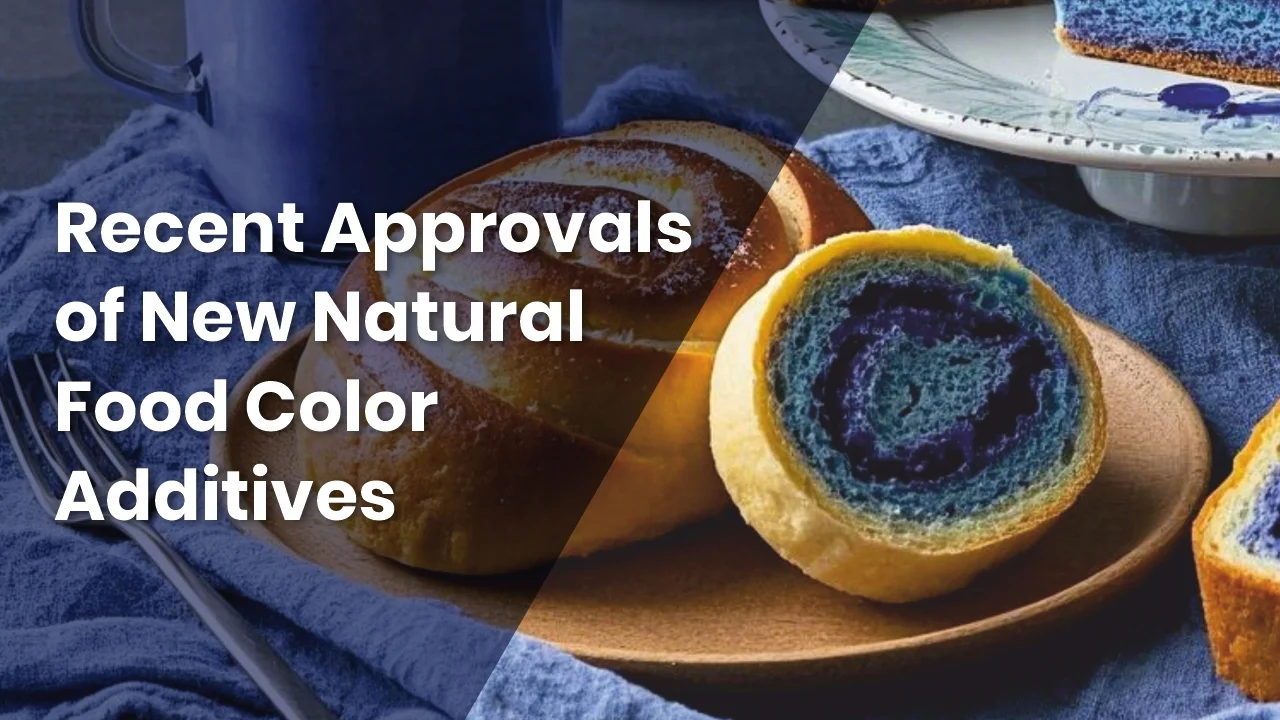
Recent Approvals of New Natural Food Color Additives

Recent Approvals of New Natural Food Color Additives

FDA approved natural blue food color from Butterfly Pea Flower, Spirulina, and Gardenia Blue in 2025.

The FDA approved a number of natural-origin color additives in 2025, driving away from synthetic dyes. Recently, the USFDA has given the green signal to three natural colors, most notable for their blue color, functionality, and consumer value. These include Natural blue color extracted from Butterfly Pea Flower, Spirulina blue, and Gardenia Blue containing the active genipin. This regulatory milestone provides ingredient developers such as Vinayak an exciting chance to provide innovative, safe, and market-relevant color solutions.

Newly Approved Natural Food Colors and Their Applications 

Butterfly Pea Flower Blue is a pH-sensitive blue colorant that produces deep blues and purples due to its coloring pigment, Anthocyanin. Approved for use in food and beverages, dairy drinks, ready-to-drink teas, chewing gums, candies, ice cream, yogurt, and reaching as far as snack foods like breakfast cereals, crackers, chips, and pretzels. Used extensively in uses such as herbal teas, lemonades, cocktails, frozen desserts, candies, Alcoholic Beverages, Confectionery, nutraceuticals, and the Culinary Industry.

Spirulina Blue: although not recently licensed for use in 2025, this blue-green algae-based color is still a staple on the natural color range. Traditionally used in confectionery, chewing gum, dairy, and desserts, it continues to be a foundation point for natural blue colorations, allowing easy assimilation.

Gardenia Blue: In July 2025, the FDA approved Gardenia jasminoides, a natural blue color produced by the pigment genepin from gardenia fruit, for applications in sports drinks, flavored waters, fruit drinks, ready-to-drink teas, and hard and soft candies. It is yet another addition to the natural weapons for beverages and confectionery as synthetic blues are phased out.

These approvals and uses expand the natural color palette, enabling more formulation flexibility and supporting the regulatory push to phase out synthetic dyes.

Natural vs. Synthetic Dyes: Safety, Taste, Stability, and Regulation

Safety: Both gardenia blue and butterfly pea extract withstood the FDA’s rigorous testing, toxicological, and exposure evaluations prior to approval. Similarly, Spirulina has been used for several decades. On the contrary, synthetic dyes such as Red No. 3 were questioned due to possible health concerns, inviting regulatory imperatives for phase-outs.

Taste: Natural extracts may impart subtle flavors. Formulators often compensate through blending or masking, while synthetic dyes remain flavor-neutral. However, consumer preference for authenticity outweighs this limitation.

Stability: Vinayak’s natural color solutions offer pH and heat stability. While synthetic dyes prove more resilient to processing, they lack the consumer and regulatory approval that natural colors currently have.

Regulation: The FDA has called for a voluntary phase-out of petroleum dyes such as Red No. 3 before the 2027 deadline. Natural alternatives will facilitate this transition; the food market is already on board with reformulation.

Role for Ingredient Manufacturers Such as Vinayak

Vinayak is poised to spearhead this transition by taking advantage of its competitive advantage in:

  • Industry-leading extraction and formulation delivering intense, high-quality colors, and addressing stability issues across applications.
  • Technical collaboration and regulatory assistance helping brands manage compliance, testing, and scale-up.
  • Customized blends and storytelling assistance: integrating butterfly pea, spirulina, and gardenia blue to showcase transparency and consumer trust.
  • Consistent, sustainable supply chains ensure consistency and scalability.

This targeted strategy provides Vinayak with a competitive edge in defining the future of natural food color.

Final Thoughts

Natural colors offer an intense color without the harmful effects of synthetic dyes. The approval of these colors indicates a profound market shift from artificial to natural colorants. As synthetic dyes are under speculation and undergoing a ban, F&B manufacturers need to shift to their natural counterparts. The aptation of manufacturers to natural blue colors like Spirulina, Gardenia Blue, and Butterfly Pea color pigments provides them a competitive edge in this ever-growing market. Choosing manufacturers like Vinayak who make R&D investments, ensure supply security, and engage in collaborative innovation will define the destiny of naturally colored vivid food and beverage products.