icon-globe
Search Connect with us

Ecoflav Mango Powder: Natural Flavor for Food Manufacturers

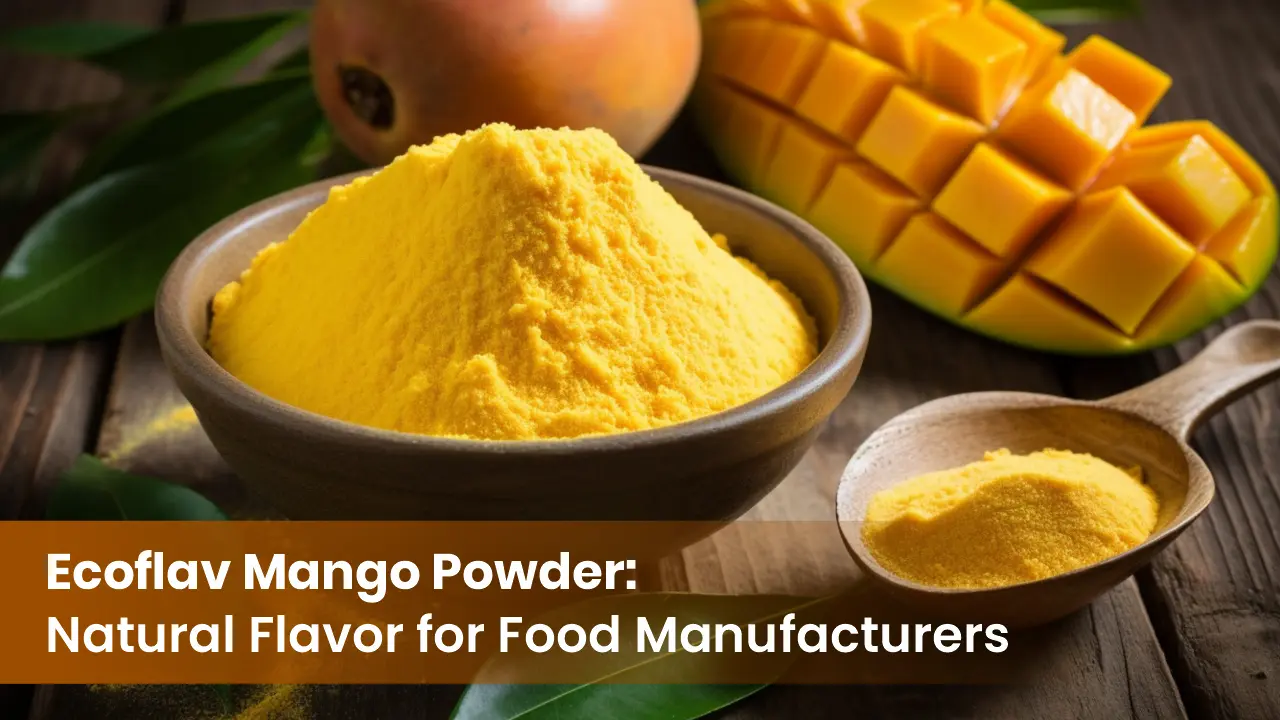
Ecoflav Mango Powder: Natural Flavor for Food Manufacturers

Mango is one of the most popular flavors in the global food and beverage landscape. It’s a familiar one that instantly clicks with shoppers, no matter which they choose, revitalizing beverages, rich desserts, or innovative forms of nutrition. However, with fresh mango comes operational challenges such as limited shelf life, storage sensitivity, and variable crop conditions. Ecoflav Mango Powder was formulated to leapfrog these issues, enabling food manufacturers to offer true mango flavor with consistency and control.

The Demand for Natural Fruit Ingredients in Food Processing

As consumers demand authentic fruit taste, product formulators must find ways to keep that flavor intact during manufacturing and longer supply chains. Spray-dried fruit powders have emerged as an effective answer because they capture sensory impact while allowing for longer storage and cost-effective handling. With Ecoflav Mango Powder, manufacturers can maintain flavour integrity in applications where fresh fruit forms raise challenges.

What Makes Ecoflav Mango Powder Unique

Ecoflav Mango Powder starts with ripe, great-tasting, high-quality mangoes that undergo a controlled spray-drying process to preserve their unique aroma, sweetness, and deep color. Each production batch is tested to ensure performance does not change in different applications and processing conditions. Formulators get a consistent ingredient that performs predictably at scaling up from pilot production to commercial manufacturing.

Key Functional Benefits for Manufacturers

Manufacturers need ingredients that support efficient processing. Ecoflav Mango Powder dissolves reliably, minimizes wastage, and eliminates the need for cold chain logistics. It ensures flavor delivery uniform batch to batch, making production planning easier and allowing teams to reduce variables. Over time, these plant operations benefits translate into substantial quality and time-to-market improvements.

Versatile Applications Across Food Categories

Ecoflav Mango Powder performs in a wide range of food and beverage systems, from instant mixes and flavored waters to ice creams, yogurts, confectionery fillings, and fortified snacks. It enables brands to launch regionally pertinent flavors and premium tropical experiences. Its stability opens opportunities to extend to warm geographies and longer channels to market.

Enhancing Flavor, Color, and Shelf Life Naturally

Ecoflav enhances taste and visual appeal even at low usage levels, supporting both sensory consistency and formulation cost control. The dry format protects against spoilage, oxidation, and transport damage. This stability safeguards product quality for brands selling across diverse retail environments until it reaches the consumer.

Let’s Create Better Mango Experiences Together

Explore how Ecoflav Mango Powder can support your next beverage, dairy, confectionery, or nutrition innovation. Share your application challenges, and the Vinayak team will guide you with practical solutions and technical insights tailored to your goals.

How Fruit Powders Elevate Modern Beverages

How Fruit Powders Elevate Modern Beverages

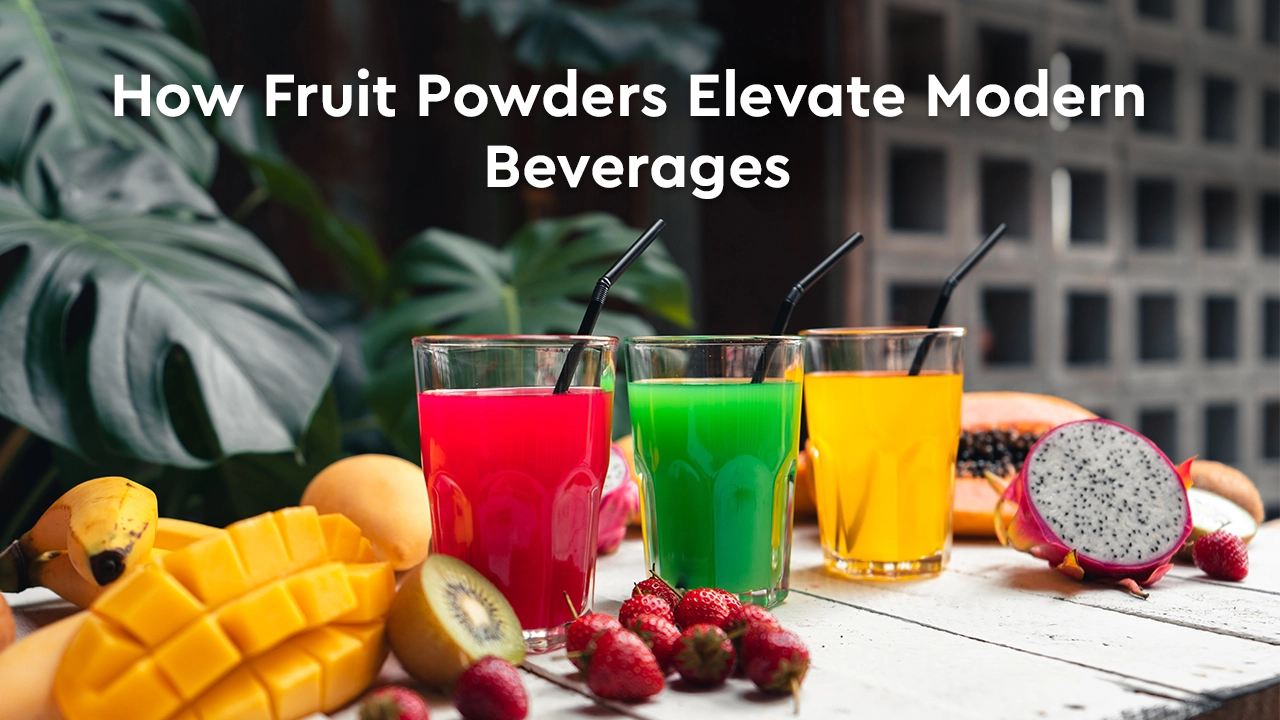
Image of Natural fruit powders for beverages adding real fruit flavor and color

Introduction to Fruit Powders for Beverages in the Industry

Fruit powders have emerged as the go-to option for beverage producers who desire consistency of formulations, processing effectiveness, and a longer shelf life. Created with advanced spray-drying processes, the fruit powders maintain essential sensory and nutritional features of fresh fruit. It offers excellent handling and storage advantages. In contrast to fruit purees or concentrates, fruit powders remove cold chain requirements and lower transportation expenses. Their flowability, uniform particle size, and flavor profile stability suit them for dry and liquid beverage applications such as instant premixes, energy drinks, RTD beverages, and flavored dairy or plant-based systems.

Enhancing Tropical Flavor Profiles in Beverages

Tropical flavors remain one of the most popular options of beverage innovation, as users worldwide increasingly seek natural, exotic taste profiles. Fruit powders enable manufacturers to deliver these profiles reproducibly over scale production. They contain controlled flavor strength and natural acidity, ensuring batch-to-batch consistency that is difficult to attain through fresh fruit derivatives. Furthermore, fruit powders allow formulators to create region-specific formulations to address local palates without changing the base-beverage matrix. This flexibility allows for faster product development, simplified flavor standardization, and improved operating efficiency among different production locations.

Orange Powder: A Zesty Contribution to Beverage Development

Orange powder provides a harmonious blend of citrus taste, fragrance, and acidity, and is thus a popular ingredient in functional and thirst-quenching beverage forms. From a production perspective, spray-dried orange powder offers very good solubility, low sedimentation, and even dispersion. It also aids in nutritional positioning with naturally derived vitamin C, enabling beverage companies to uphold natural ingredients without the need for artificial flavor boosters or acidulants.

Mango Powder: The Sweet and Exotic Aroma

Mango powder provides intense, sweet tropical flavor and silky mouthfeel that are popular in flavored milks, smoothies, and reconstituted fruit drinks. It provides consistent flavor intensity and coloring stability, with sensory integrity preserved even under extreme heat processing or long-term storage. Its year-round supply obviates seasonality dependence, a general pitfall of fresh mango pulp. Mango powder streamlines blending, minimizes variability, and provides reproducibility from batch to batch for beverage formulators. The result is that it is a strategic ingredient for large-scale beverage companies seeking to pursue tropical appeal with efficient process control.

Berry Powders: Flexible and Taste-Oriented Customization Options

Berries like strawberry, blueberry, and raspberry have a number of functional benefits over flavor enhancement. They provide natural color, nice aroma, and a perfect sweet-acidic taste to dairy and dairy free beverages. With their standardized structure, they provide consistent sensory performance and harmony with other flavor systems. Berry powders are commonly added to nutraceutical and functional beverages because of their antioxidant activity and established link with health and well-being. Their high solubility and fine particle size make them simple to blend in powdered premixes and ready-to-drink lines without any texture or clarity concerns.

Pineapple Powder: The Secret to Revitalizing and Tropical Drinks

Pineapple powder adds a characteristic tangy-sweet tropical character that is commensurate with the sensory expectations of energy and hydration beverages. It offers controlled acidity, allowing for enhanced flavor crispness while promoting balance in multi-fruit combinations. The powder form provides process stability, allowing consistent taste and color over different pH levels and thermal treatments. Its solubility and reconstitution character establish it as a great option for powdered beverage blends and liquid concentrates where uniform flavor dispersion is paramount. For producers, pineapple powder streamlines logistics and minimizes formulation complexity related to fresh fruit inputs.

Guava Powder: Exotic Flavor for Specialty Beverage Markets

Guava powder provides a distinctive sweet-tart taste with aroma intensity that separates it from other tropical fruit flavor choices. It is picking up momentum in niche beverage channels dedicated to exotic and regionally themed flavor varieties. The compatibility of the powder with acidic and neutral beverage systems enables it to be utilized in carbonated beverages, flavored waters, and RTD fruit blends. Its stable sensory properties and uniform flavor load allow for consistent duplication across batches of manufacture, facilitating brand differentiation and innovation in competitive beverage markets.

Balancing and Blending Fruit Powders to Achieve Complex Flavor Profiles

Achieving multi flavored involves strict control over sweetness, acidity, and aroma. Fruit powders facilitate such control through standardized strength of flavor and moisture level, allowing predictable performance during blending. Producers can blend powders to create layered, sophisticated profiles with efficient processability. Fruit powders are less likely to cause instability of flavors and microbial contamination compared to purees or concentrates. Their suitability for blending with many carriers and stabilizers enables easy blending with other functional ingredients like proteins, vitamins, and botanicals. This degree of formulation control facilitates consistent product performance between markets and batches.

Consumer Trends Dictating Demand for Tropical and Custom Flavors

Global drink trends are increasingly moving towards natural, fruit-dominated flavor profiles with lower levels of artificial additive presence. Fruit powders enable producers to respond to these trends successfully by offering scaleable, shelf-stable ingredients that reduce formulation and supply chain complexity. Enhanced interest in customization and geographic flavor trends has also increased the necessity for flexible ingredient systems. Fruit powders allow for brands to react quickly to new market opportunities, introduce seasonal flavors, or produce limited runs without affecting operations Their cost-effectiveness, consistency, and technical flexibility are key benefits to meet today’s requirements of beverage manufacturers in competitive, fast-moving markets.

Conclusion

Fruit powders have evolved as a prime addition in beverage development, providing formulators with the versatility to obtain true flavor, color, and nutritional performance without sacrificing production efficiency. Their compositional stability, solubility, and easy standardization make them suitable for use in beverages in a range of broad categories from functional hydration drinks to dairy and plant-based drinks. Vinayak Corporation has a range of spray-dried fruit powders including Mango, Pineapple, Orange, Guava, and Mixed Berry, which are optimized for beverage use where flavor and process stability delivery is critical. These powders offer producers consistent choices to meet market demand for natural, tropical, and customizable beverage profiles.

Why Choose Fat Powders for Your Daily Beverage Fix?
Why Choose Fat Powders for Your Daily Beverage Fix?

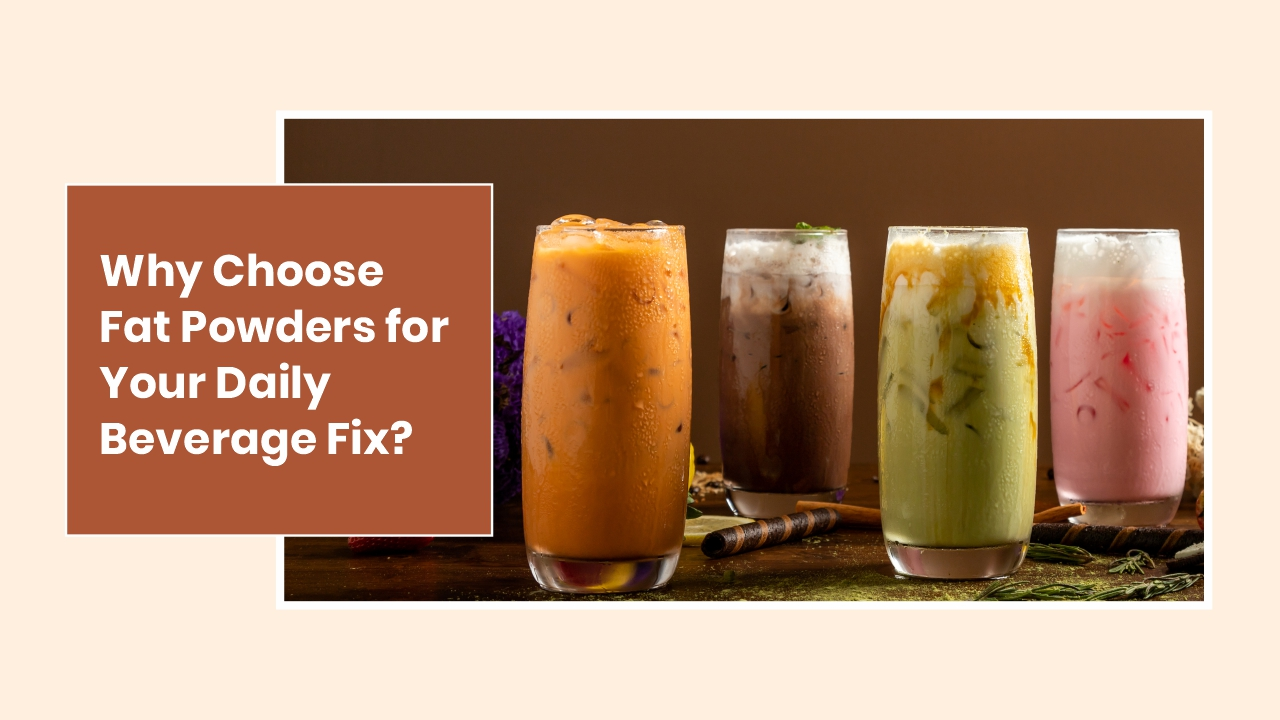
Image of Fat powders enhancing beverage texture and flavor in drinks like coffee and frappes

In the fast-changing beverage world of today, customers yearn for café-like intensity, convenience, and uniform taste with each sip, whether in the form of a ready-to-mix cappuccino, instant frappe, or cold coffee. For cafe operators and manufacturers, that balance of taste, stability, and cost-effectiveness is not as easy. Traditional fats or creams will create the luxurious texture required but come with storage, stability, and formulation concerns. Fat powders became the easy, high-performance alternative for today’s beverage systems.

What Are Fat Powders

Fat powders are spray-dried versions of fats that can be dairy or of vegetable origins such as coconut or palm oil. The fat is coated with carriers such as glucose syrup or milk solids in a free-flow, easy-to-mix powder into dry or liquid mixes. The powders match the creamy flavor and texture of liquid fats without the shelf-life concerns of perishable commodities.

As a result of its versatility, fat powders have widespread uses in premixed drinks, frappes, milk tea, and nutrition drinks. Body, mouthfeel, and flavor delivery characteristics are offered by fat powders that are necessary in the development of indulgent and stable drinking products.

Challenges Faced by Drink Manufacturers

Formulating a stable, creamy beverage is a technical challenge for manufacturers. Emulsion instability, where fat and water separate, can compromise texture and product consistency. Conventional liquid fats and dairy creams are also prone to oxidation and spoilage, creating challenges for large-scale production and shelf-life reliability.

Cold storage and refrigerated transport introduce added logistical expense and complexity, and fat content variation can lead to non-uniform sensory quality. The majority of formulas require more than a single stabilizer and emulsifier to maintain the texture, adding to the manufacturing cost and making the ingredient list complicated. These pain points are the reason that the industry is slowly tending toward dry, stable fat ingredients with simple processing not compromising on quality.

Why Fat Powders Are On The Rise In Drinks

Today’s beverage industry is dominated by instant, ready-to-consume, and on-the-move packaging that demands shelf-stable and easy-dispersible ingredients. Fat powders do all these demands. They are free from the cold storage hassle, which is ideal for formulators who want to reduce their supply chain complexity. They have good solubility for easy dispersion in both hot and cold beverages, and their ability to replicate the creaminess of fresh milk enhances the end-user sensory experience.

A further advantage is versatility. Fat powders offer versatile functionality across various beverage systems, including instant coffee and tea mixes, milkshakes, and fortified nutritional drinks. The rising demand for plant-based products drives the adoption of non-dairy fat powders, allowing manufacturers to expand their offerings without sacrificing texture or flavor.

How Fat Powders Can Benefit Your Brand

For producers, the use of fat powders is the absolute equivalent of operational efficiency and product consistency. They provide batch-to-batch consistency in texture and flavor, and their stability avoids oxidation and spoilage. They simplify the production process and reduce costs as they are easy to handle, measure, and store.

From a consumer point of view, fat powders provide body and creaminess to beverages, adding sensory appeal. To producers, such uniformity provides confidence, each serving of coffee or shake is the same flavor, whether produced in one factory or another. It further helps control costs by avoiding ingredient wastage and dependence on refrigerated storage.

Product Development with Fat Powders

The versatility of fat powders has made them a pillar to beverage innovation. They perform exceptionally in coffee and tea premixes to achieve a uniform, creamy mouthfeel like milk or cream. Cold beverages like frappes or iced coffee supply silky texture and stability without foam collapse and separation.

They are also effective in nutritional beverages where they provide mouthfeel and mask off-flavors of proteins or vitamins. In dessert-style drinks and flavored milk, fat powders provide body and improve the sweetness-creaminess balance. Manufacturers can modify fat content, carrier type, and particle size to produce products with certain sensory or nutritional objectives.

Why Coffee Chains and HORECA Are Turning to Fat Powders

The HORECA market and coffee shop chains face unique challenges: uniform taste across outlets, storing ingredients, and fast, reliable service. Fat powders are emerging as convenient ingredients in this field. They simplify beverage making, reduce dependence on cold storage, and promote consistency of taste and texture. It is vital to maintain the taste and mouthfeel of the product offerings across franchises, even if miles apart. Standardised raw material ensures that brand integrity is maintained across all stores and locations. In such cases, the use of premixes containing fat powders ensures that uniformity in all aspects is maintained. The result is a reliable, high-quality product that boosts brand reputation and operating efficiency.

Conclusion and Vinayak’s Fat Powder Solutions

Fat powders have transformed how the beverage business approaches creaminess, stability, and convenience. From instant coffee mixes to chilled frappes, fat powders enable the potential to reach consistent quality with less complexity.

Vinayak’s Oleomorph offers a broad range of spray-dried fat powders for use in beverages and foods, including high oleic sunflower oil (HOSO), medium chain triglyceride (MCT), coconut, sunflower, palm, groundnut, soybean, and custom-made vegetable oil blends for your unique creation. These powders are designed to enhance flavor, texture, and stability with smooth solubility, creamy mouthfeel, and consistent performance in every beverage system. Whether making instant premixes of coffee, frappes, or nutritional drinks, Vinayak’s fat powders offer the quality and consistency to deliver better products in taste, texture, and user satisfaction.

Beta Carotene Color: Natural Food Color for USA Food & Beverage Manufacturers

Beta Carotene Color: Natural Food Color for USA Food & Beverage Manufacturers

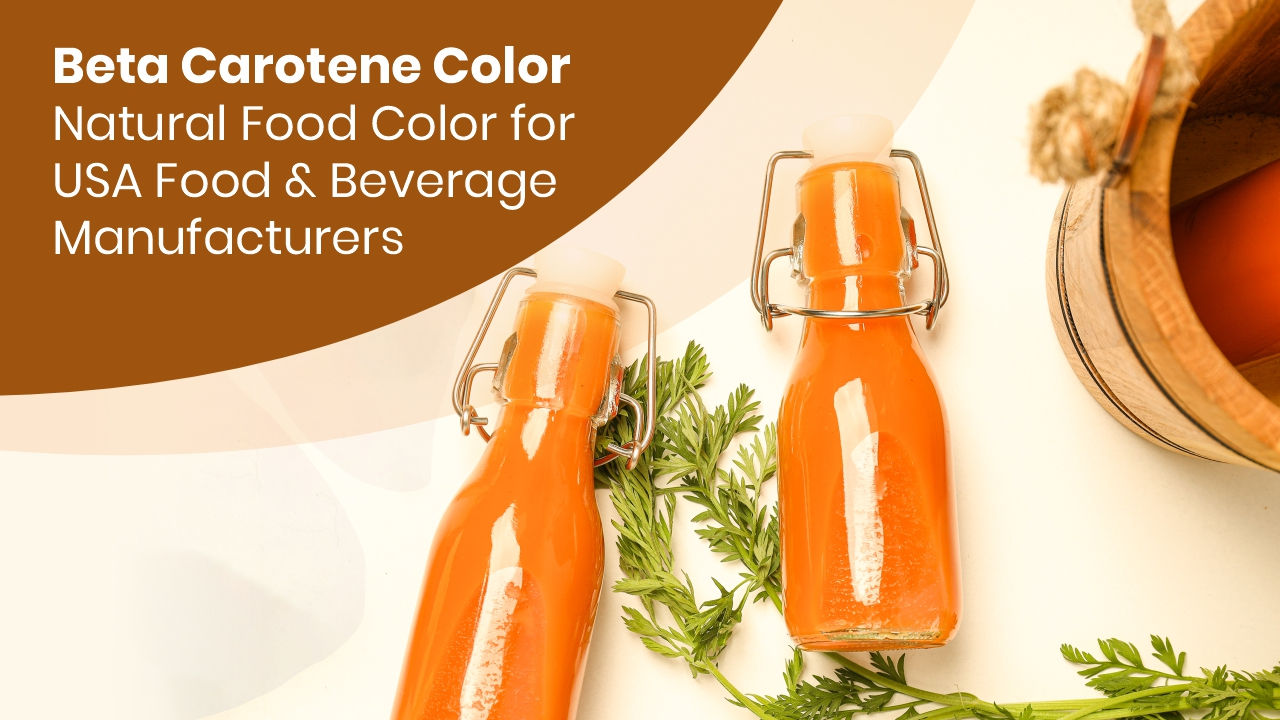
Image of Beta Carotene Natural Color in Food & Beverage Products

Introduction: Why Natural Ingredients Are Gaining Preference

The food industry in the United States is transforming rapidly as consumer opinions shift towards foods with natural, recognized ingredients. Growing worries over artificial additives, along with state-level regulations to outlaw petroleum-based dyes, have fueled the momentum towards natural colorants. Here, beta carotene is among the most widely used natural colorants with a balance of good color intensity and nutritional value. Market studies predict steady growth for beta carotene uses along with other food colors/food dyes of natural origin, and the food and beverage industry is the largest market sector.

What is Beta Carotene Color

Beta carotene is a carotenoid pigment naturally occurring in carrots, sweet potatoes, spinach, and other vegetables. Its molecular shape allows it to soak up light at the blue end of the visible spectrum, and for this reason, it imparts deep yellow to orange hues. Apart from its coloring capability, beta carotene is a provitamin A, which functionally distinguishes it from most other food colorings. Commercially, it may be available in a range of delivery forms like water-dispersible powders, oil suspensions, and beadlet encapsulations, in order to enable the manufacturer to formulate its use to fit individual product matrices. This quality has provided it a steady place in product ranges from soft drinks to bakery fillings.

Regulatory Status and Safety in the USA

Beta carotene is a Food and Drug Administration (FDA) approved color additive in the United States. It can be used by manufacturers without FDA permission on a batch-by-batch basis, provided that it meets identity and purity requirements and is applied in compliance with Good Manufacturing Practice (GMP). It is also GRAS (Generally Recognized As Safe), further contributing to its safety profile

Principal Uses in USA Food Production

Beta carotene is valued for its stability to give yellow to orange shades that match consumers’ best perception of natural color. Beta carotene is applied extensively in milk foods, where it gives the characteristic golden color. In liquids, beta carotene imparts an attractive orange color. Bakery and confectionery products also benefit from its warm hues to provide depth to cakes, coatings, and sugar confections. In addition, dietary supplements and nutraceuticals also use beta carotene both for color and vitamin A activity and thereby impart the twin benefits of color and nutrition.

Health Value and Functional Benefit

Unlike artificial colors, beta carotene also imparts physiological functionality in addition to color. It is a precursor to vitamin A. Beta carotene is a free radical quencher as well, neutralizing free radicals that cause oxidative stress and cell damage. The dual value, nutraceutical and functional, has made Beta carotene even more appealing to manufacturers who wish to create their products unique in a health-aware market. Scientific research underscores the fact that food form beta carotene is generally tolerated in most cases, though excessive levels of supplementation regardless of food matrices have been linked to adverse effects in some populations, giving prominence to balanced use.

Case Study: Industry Adaptation

Several leading food manufacturers have reformulated conventional ranges by substituting synthetic colorants with beta carotene to suit customer demand.

For example, beverage companies have introduced fruit drinks and fruit smoothies colored with beta carotene emulsions on color stability grounds as well as a “from nature” positioning. Similarly, bakery companies have turned to beta carotene powders in order to achieve consistent orange shades in icings and fillings, in addition to focusing on the nutritional quality of provitamin A. Industry research confirms that these changes not only improved brand image but also achieved better market acceptance on the part of health-oriented consumers.

Conclusion: The Future of Beta Carotene Color in the USA Food Sector

Beta carotene is well-placed to be a cornerstone in the conversion process to natural food color within the U.S. food and beverage market. Beta carotene is a great alternative for artificial colors by providing an intense vibrant color, granted approval under regulations, and attracting nutritional notice. Further technological advances in encapsulation, and low-cost extraction methods will further improve its stability and open up broader applications. With consistent market demand moving toward functional and natural ingredients, beta carotene stands at the epicenter of product innovation