icon-globe
Search Connect with us

Impact of Removing Red No. 3 Color Additive on Product Reformulation

Impact of Removing Red No. 3 Color Additive on Product Reformulation

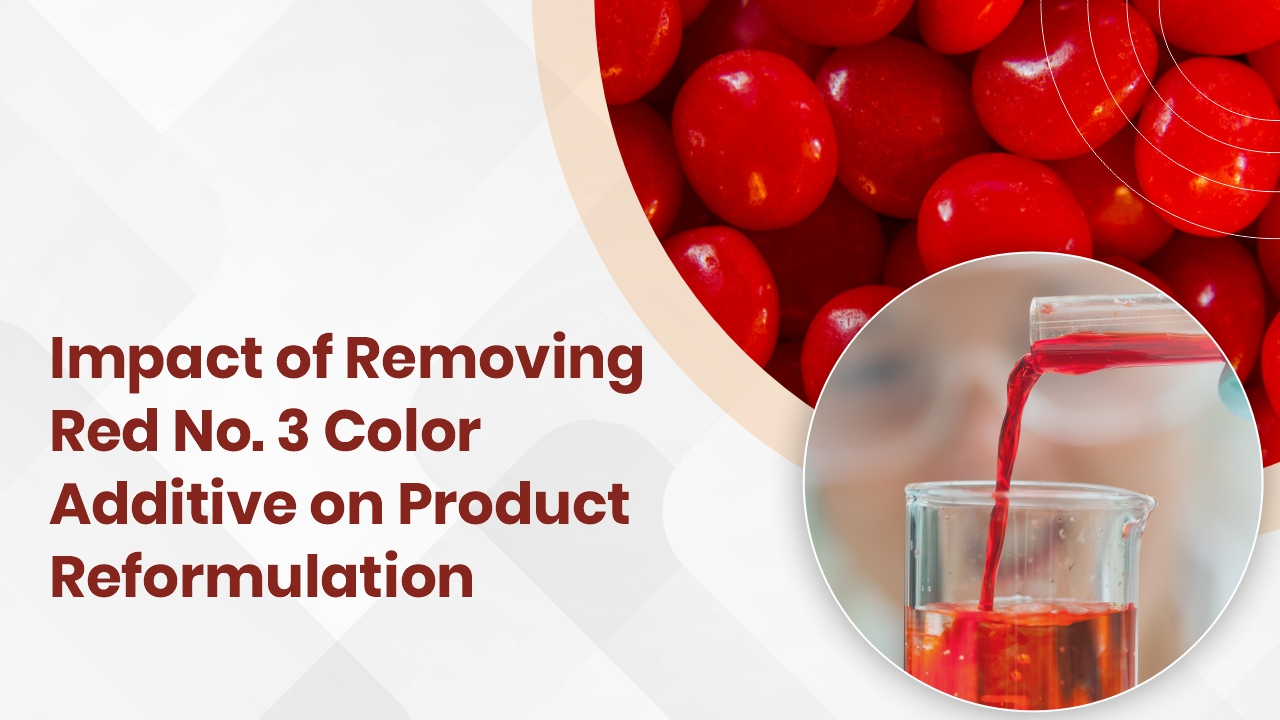
Red No. 3, or Erythrosine, has been used for years to add a bright cherry-red color to baked goods, beverages, confectionery products, and specific pharmaceutical uses. Its affordability and stability in the long term in some uses led to its being a favorite synthetic coloring substance for decades. But changing regulatory policies and increasing safety concerns have altered the scenario. The FDA has banned the use of Red No. 3 in foods, dietary supplements, and internally consumed drugs. Firms now have to act under the compulsion of reformulating impacted products.

Regulatory Environment

The FDA is banning Red No. 3 on grounds of carcinogenicity. By January 2025, this led to a final ruling officially prohibiting its use in foods eaten in the United States, with 2027 food and 2028 medicine compliance dates. This places the U.S. on the path toward catching up with the European Union, where it has traditionally placed stricter requirements on using Erythrosine in foods. Other countries, such as Japan’s MHLW, restrict or limit its use.

To global manufacturers, the reformulation hurdle is not exclusive to US markets. Compliance across jurisdictions requires recipe modification that maintains product quality while meeting international standards.

Uses of Red No. 3 in Foods and Beverages

Before its ban, Red No. 3 played several vital roles:

It produces deep, rich red color for gels, frostings, and candies, and has shown consistent performance across pH and light conditions. Compared to many of its natural alternatives, it is an affordable coloring agent. Despite these advantages, its link with safety issues and consumer demand to know the origin of ingredients made it impossible for it to be used in the long run.

Challenges of Reformulation

Producing products without Red No. 3 presents some technical and commercial challenges:

1. Color Matching: Identification of an alternative with the same cherry-red depth without color shift or bleaching during processing.

2. pH Sensitivity: Natural reds can be heat—and pH-sensitive, presenting formulation challenges in beverages and baked foods.

3. Cost and Supply: Botanical substitutes are more costly and derived from agricultural supply fluctuation, affecting price and supply.

Natural and Alternative Options

Red No. 3 substitutes are under consideration by manufacturers in the form of natural and synthetic substitutes. Among the most prevalent ones are:

1. Rubra Red – Natural pink-red color from a beta-carotene material. It is suitable for processing at high heat and extensively used in fatty-based and dry mix products, particularly where warm red shades are desirable.

2. Paprika’s natural color — Paprika oil or Paprika oleoresin from red pepper (Capsicum annuum) gives it a rich red color. It is soluble in fat-based formulations and can be employed in numerous savory and fatty food items.

3. Carmine (Cochineal Extract)—This natural color, derived from the cochineal insect, is used for deep red to crimson tones. It is highly stable over a broad pH, heat, and light range and finds applications in beverages, milk products, confectionery, and bakery.

The choice relies on the product matrix, process conditions, and positioning of the target consumer.

Strategic Implications for Manufacturers

Phasing out Red No. 3 comes with its own challenges like:

1. Longer R&D Time Frames: Comparative testing of alternative color sources under different processing and storage conditions.

2. Consumer Acceptance: The end product must satisfy appearance, taste, and shelf life requirements.

3. Transparent Labeling: Label natural alternatives or altered lists of ingredients clearly to prevent confusion.

4. Global Alignment: Regulatory-synced formulation development to address multiple regulatory requirements and reduce geographical variability.

Conclusion: 

Removing Red No. 3 represents a notable milestone in further moving toward non-petroleum-derived synthetic coloring agents. Short-term reformulation difficulties are traded for the opportunity for manufacturers to become innovative with artful natural alternatives that meet changing consumer attitudes and regulatory necessity. Natural colors provide a competitive edge to companies in an increasingly transparent, safe, and sustainable marketplace.
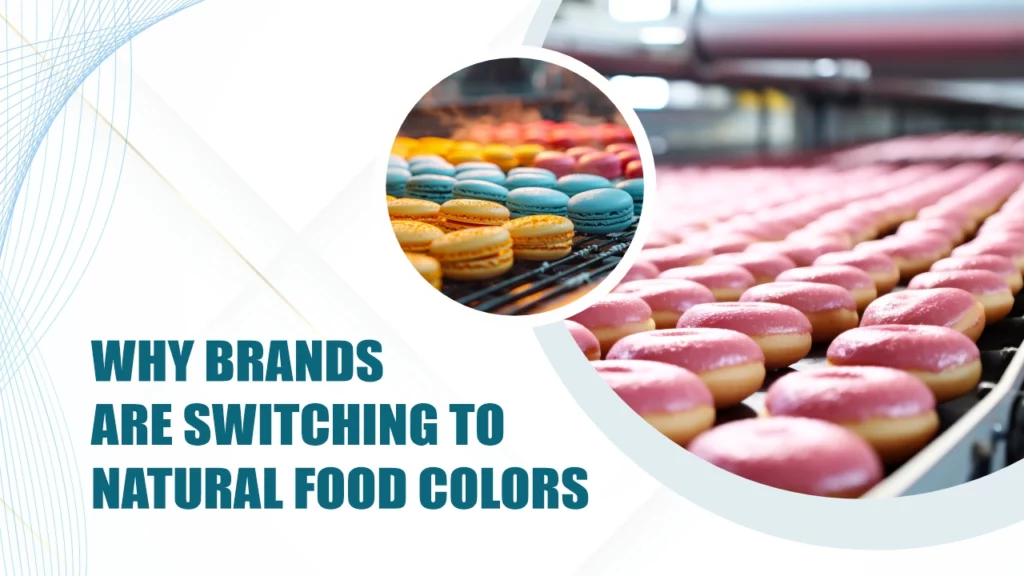
Why Brands Are Making The Switch To Natural Food Colors Introduction

Why Brands Are Making The Switch To Natural Food Colors
Introduction

Natural food colors in food and beverage industry innovations

Consumer preference is shifting away from petroleum-derived artificial food color to
natural food coloring, on the basis of reasons including safety, transparency, and
sustainability. It has been witnessed in consumers, regulators, and food and beverage
manufacturers. Natural food dyes are trending as consumers become more sensitive to
sensitivities and potential health impacts created by artificial colorings, such as
hyperactivity among children and allergic responses among sensitive parties. Food and
beverage regulatory bodies across the globe have responded with tighter labeling
regimes or new prohibitions, pushing the food and beverage industry towards plant
food. This is driven by shifting customer values and health issues.

The Market Trend towards Natural Colors

The global natural food colors market is set to grow sizably, fueled by regulatory limits
on artificial dyes and increasing consumer affinity for natural and healthier products.
High growth will be witnessed in the Asia-Pacific region, with market revenue from
USD 346.4 million in 2022 growing to USD 717.3 million in 2030, corresponding to a
CAGR of 9.5%. It is also fueled by widespread high-volume uptake across numerous
industries.

The Undisclosed Challenge: Reformulation of Products using Natural Colors

Formulation change to accommodate natural colors is with technical challenges. They
are mostly less stable than synthetic colorants, are sensitive to heat, light and pH.
Technical innovation is overcoming these issues. Techniques like microencapsulation,
nanoemulsions, and refined extraction processes have enhanced heat, light, and pH
stability. These innovations preserve color, improve shelf life, and provide new
possibilities for natural color in demanding applications. Breakthroughs in encapsulation
and ingredient delivery systems allow natural colorants to preserve strength under
different process conditions. Regulatory Pressure on Synthetic Colors
Certain artificial colors are banned or stric labeled in most areas.

EFSA, the European Food Safety Authority, has outlawed food dyes linked to
hyperactivity in children.

In the U.S., the Food and Drug Administration prohibited a sequence of petroleum-
based dye products, such as FD&C Red No. 3, in cosmetics and certain foods, on grounds
of safety. California has also passed a bill prohibiting the use of a number of artificial
food colorings in children's food for hyperactivity and other health causes by 2027. The
regulatory environment forces the industry to use plant-based colors such as
anthocyanins, carotenoids, and betalains. Sustainability and Consumer Perception
Natural dyes are usually derived from renewable crops, vegetable and fruit processing
waste or by-products, such as skin, seeds, and pulp.
Use of co-products in this way minimizes food waste and improves circular economy
operations. A case in point is grape skin, to be used for anthocyanin pigments, which
often comes from wine waste production, and carrot pomace can be processed to
produce beta-carotene. The method, apart from reducing the environmental footprint,
also reinforces agricultural value chains as it improves farmers' and processors'
revenues.

Conclusion

The movement towards natural colors in foods is the intersection of regulatory,
technological, and consumer forces. Formulation hurdles remain, but ongoing progress
in pigment stabilization is making natural options increasingly viable to large-scale
production.

Turmeric vs Artificial Yellow Colors

Turmeric vs Artificial Yellow Colors​

What is Turmeric Color or Curcumin, and Why is it used in Food?

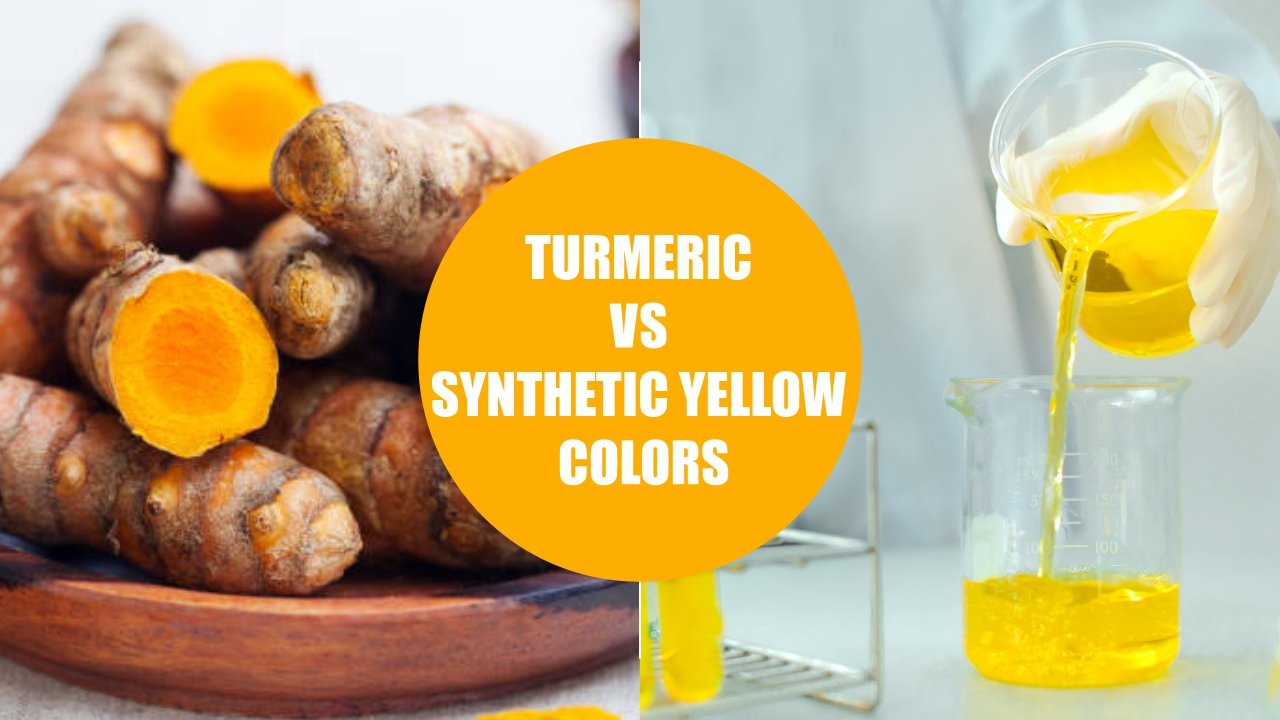
Turmeric color is obtained from the Curcuma longa rhizome, whose main active ingredient, curcumin, is responsible for the characteristic bright yellow color. Traditionally applied in food and medicine, it is increasingly becoming relevant in food processing on account of its bright color and natural origin. Turmeric color in processed food has the virtue of warm shade, ease of use, and compatibility with oil and water-based applications. It finds wide application in blends, snacks, sauces, pickles, rice foods, and dairy foods. Its usability in dry mix applications and heat-treated foods allows it to be the most sought-after yellow (PMC) by manufacturers as a stable natural alternative.

Health Concerns Associated with Synthetic Yellow Pigments

Dyes like Tartrazine (Yellow 5) and Sunset Yellow (Yellow 6) are petroleum-based and still used as additives in most packaged food. Various studies have linked them to health issues. For instance, studies suggest that tartrazine is likely to induce hyperactivity in children (CSPI). In certain groups, such dyes have also been reported to trigger allergic reactions and immunologic responses. Regulatory agencies such as EFSA and FDA have examined these dyes and, in a few instances, mandated warning labels. Their chemical structure, especially their azo moieties, has been the focus of toxicological research for decades.

Natural Turmeric Color: Health Benefits Beyond Coloring

Curcumin, the pigment in turmeric, has been studied at length for its biological activity. It has antioxidant and anti-inflammatory activities. Research indicates that it can reduce oxidative stress (Healthline) and maintain joint function. There is also emerging evidence that it plays a role in improving metabolic and cardiovascular health. Curcumin acts on cellular signaling and maintains the body’s own detoxification processes. These qualities make it a compound of interest for both the food and nutraceutical industries.

Comparison of Performance: Color Strength, Stability & Shelf Life

  • Color Strength

Turmeric color provides a rich, golden-yellow hue. Although it might need greater inclusion levels than artificial dyes, formulation developments such as microencapsulation have improved its pigment retention and consistency (MDPI). It is consistently reliable in both transparent and opaque formulations and is available for a broad range of food uses.

  • Stability

ECOCOL’s Curcumin is pH and heat-sensitive. It shows excellent heat stability across various applications. It works best in the pH range of 3.0-6.0. It offers high color payoff with small dosages.

  • Shelf Life

Synthetic dyes usually have a longer shelf life, but new formulations of turmeric color have significantly bridged the gap. Turmeric colors can last for up to 12  months if stored in low-humidity and light-proof packaging. Spray drying and emulsification are among the methods that have made them easier to use in many food matrices without affecting performance.

Why Choose Vinayak: Reliable Manufacturer & Exporter of Turmeric Color to the USA

At Vinayak, we are expert manufacturers of natural turmeric color in various forms, custom-made for food and beverage manufacturers worldwide.

Our Ecocol range provides 

  1. Powdered and Liquid Form
  2. Oil Soluble (OSL) and Water Soluble (WSL) Grades
  3. Stable Color Pay-Off Across Applications
  4. Heat and pH Stable Formulations

We provide turmeric color solutions for food and beverage producers in regulated markets such as the USA with high-performance, quality, safety, and formulation meeting solutions, perfect for replacing synthetic yellow dyes in large volumes.

Contact Us

If you’re looking to replace synthetic yellow colors with turmeric-based alternatives or want customized formulation support, reach out to us:

✉️ inquiry@vinayakcorporation.com 🌐 vinayakcorp.aufy.net/

Why Consumers Are Switching from Petroleum Dyes to Natural Colors, Find Out Now!

Why Consumers Are Switching from Petroleum Dyes to Natural Colors, Find Out Now!​

As the world’s food industry turns away from more opaque and health-risk ingredients, synthetic dyes are under growing scrutiny. Among the most controversial are petroleum-based dyes. Orange B and Citrus Red No. 2, among others such as Red 40, Brilliant Blue, and Yellow 3, are banned, under assessment, or subject to regulatory phase-outs in light of consumer safety concerns.

Food and beverage producers are now being pushed, not only by regulatory agencies but also by increasingly knowledgeable consumers, to reformulate with safer, natural ingredients. Here, our Ruby Realm and Tropical Mellow color lines provide a timely and technically viable solution.

The Decline of Petroleum-Based Synthetic Dyes in Food Industry

Petroleum-based synthetic dyes have been utilized for years for their bright color, reliability, and affordability. Orange B and Citrus Red No. 2 were used in sausage casings and coloring the rind of citrus fruits to make it look more even. Serious safety issues have been raised due to their origin from coal tar and petroleum distillates, and increasing toxicological evidence, leading to regulatory re-evaluation and compelling the industry to move towards finding safer, natural alternatives to color.

Global Regulations Drive Phase-Out of Harmful Synthetic Food Dyes

Several researches have linked artificial colorings with allergic responses, behavioral problems such as children’s hyperactivity, and even carcinogenicity in test animals. All these have prompted regulatory actions around the globe. Orange B, initially approved by the FDA in 1966 for exclusive use in sausage casings (no more than 150 ppm), has not been used since 1978 when its sole U.S. manufacturer suspended production. Nevertheless, it was technically still listed until recently. As of 2025, the FDA has taken the first steps to officially withdraw Orange B’s approval as part of a larger initiative to phase out petroleum dyes.

Citrus Red No. 2 is still allowed on non-organic orange rind in the U.S., but is up for final phase-out.

The European Union has banned various synthetic colorants already and requires warning labels on others.

This changing regulatory environment is a clear indicator: petroleum-based dyes like synthetic dyes are being phased out in favor of less hazardous alternatives.

The Technical Challenge of Replacing Synthetic Colors with Natural Alternatives

Regulatory prohibitions are merely half of the picture. Global brands are also facing increasing consumer demand for “recognizable ingredients” and “free-from” labeling. But replacing synthetic color isn’t just a labeling issue; it’s a technical challenge that needs scrutiny. In the past, natural colors have been problematic with heat stability, pH sensitivity, and batch-to-batch variation. This has made reformulation difficult, especially in applications like beverage, bakery, or confectionery, where color stability is totally critical.

Vinayak’s Natural Color Solutions: Stable, Scalable Alternatives to Synthetic Dyes

At Vinayak Ingredients, we’ve created Natural color solutions namely Ruby Realm and Tropical Mellow, they are engineered to overcome the historical limitations of plant-based pigments. These solutions are formulated for high performance in demanding food and beverage applications, offering improved stability across heat, light, and pH conditions. With consistent batch-to-batch quality and broad application versatility, they represent a practical, scalable alternative for manufacturers looking to move away from petroleum-based synthetic dyes.

Ruby Realm: Natural Red to Pink Color Solutions for Heat-Stable Applications

Ruby Realm: Is a range of Natural color solutions in the red to pink spectrum offering a variety of heat-stable colors in both powder and liquid forms useful across multiple applications

Rubra Red – A proprietary blend that provides a heat-stable red shade based on natural vegetable extracts. 

Carmine – A natural cochineal insect-derived pigment with an intense red color and high light and pH stability in a broad variety of foods.

Beetroot – A vegetable-based colour delivering a bright pink to red colour, preferably used in low-heat or cold-process products because it is prone to heat and light degradation.

Suitable for deep red to reddish-pink shades

Tropical Mellow: Heat-Stable Natural Colors in the Yellow to Orange Spectrum

Tropical Mellow: Is a range of Natural color solutions in the orange to yellow spectrum offering a variety of heat-stable colors in both powder and liquid useful forms across multiple applications

Curcumin – It is obtained from the root of turmeric and imparts a yellow pigment with antioxidant properties. It’s applicable for use in sauces, snack foods, and ready meals.

Beta Carotene – A natural pigment derived from carrots and other vegetables, it gives a golden yellow to orange colour and is extremely stable in heat and light.

Annatto – It is obtained from the seeds of the achiote tree and gives yellow to orange colors and is used extensively in dairy, bakery, and savory applications.

Paprika – It is obtained from red pepper pods which are dried and gives orange to reddish rich colors and is suitable for oil-based products and processed food. Formulated for uniform dispersion and color retention over time

Both series are available in oil and water-dispersible format (application dependent), and compatible with most current manufacturing equipment.

Why Natural Colors Are the Future

The shift to natural colors is not simply about compliance with regulations; it’s a decision for sustainability. Petroleum-based dyes depend on chemicals and high-energy processes. Natural colors, when responsibly sourced and processed, provide a more sustainable option.

In a consumer environment where consumers increasingly reward sustainability and transparency, embracing clean-label colorants is a competitive strategy.

Future-Proof Your Brand with Vinayak’s Natural Color Reformulation Solutions

With colors such as Orange B and Citrus Red No. 2 phasing out, reformulation is not only expected, it’s unavoidable. Manufacturers will get a competitive edge as they can easily cope with future regulations, customer demands, and brand security targets.

Vinayak Ingredients stands poised to help drive this shift with natural color solutions that bring performance and confidence of mind.